This guy knows from firsthand experience the carnage and death that has been wrought in Iraq; Investigative journalist Michael Ware talks about the 'sectarian bloodletting' that has engulfed Bhagdad since the occupation commenced. I have seen him on CNN before a few times, and I remember him distinctly saying once that a US pullout would lead to a "Massive Slaughter" of not only the Sunni (Al-Qaeda allied) minority, but the Kurds as well. The problem seems to be that US policy in the region has been set up to favor the majority Shia, who are closely allied with Iran and carrying out a 'Proxy war' on both Sunni groups and US forces. What a mess. Listen & consider, then please write to your congressman or senator and tell them to get to solving the problem before more US Troops have to die...
Tuesday, May 29, 2007

Kucinich joins Congressional Black Caucus/Fox debate
Re-posted from www.kucinich.us
Democratic Presidential candidate Dennis Kucinich said Sunday he would definitely participate in a September debate sponsored by the Congressional Black Caucus and scheduled to be broadcast on the Fox Television Network. Kucinich said for Sens. Hillary Clinton, John Edwards, and Barack Obama to skip the debate simply because it was to be broadcast on Fox was a snub of the Congressional Black Caucus.
“This is particularly troublesome because the concerns of African Americans should take precedent over what network is broadcasting the debate,” Kucinich said, “There are matters relating to employment, health care, education, jobs, rebuilding our cities, environment and civil rights that all presidential candidates have an obligation to address and debate. Those candidates planning to skip this debate clearly are trying to avoid a forum where there will be hard-hitting questions from people who may not agree with them. But taking questions from all sides is part of politics, and part of being President. I'm running to be President for all people in this country.”
“America needs a President with the ability and willingness to unite people of diverse political views,” Kucinich said, “Let us never forget that the symbol of our country, the American eagle, needs two wings to fly --a left wing and a right wing. I'm prepared to reach out to all Americans. We all deserve to be heard. and we all deserve to be represented.”
“Certainly many Fox viewers are not part of the traditional Democratic base,” Kucinich said, “but they have a right to hear from the Democratic candidates and we as candidates have an obligation to reach out to them. Families who view Fox News have lost loved ones in Iraq, lost their jobs to NAFTA, and lost their homes to medical bills, just as have the viewers of other networks.”
Kucinich said the refusal of the three senators to participate in the debate raises questions about whether or not they really have the ability to be President.
“First Sens. Clinton and Edwards were tricked by George Bush into voting for the war. Then they and Sen. Obama voted most of the time to support funding the war. All three have said all options are on the table with Iran, meaning they are ready to go to war against Iran. This raises questions about their judgment, about who they are they, who they represent? African-Americans -- and Fox viewers -- have a right to know.”
“I know some people object to Fox News,” Kucinich said, “and they take issue with Fox coverage, and the way Fox covers the news. I've taken issue with Fox on many occasions, but I don't hesitate to be questioned by Fox or any of its affiliates. I've also taken issue with the New York Times -- which, after all, was largely responsible for selling the Bush war plans to the American people. But this will be a live debate. The issue here is not what questions Fox broadcasters will ask, but how the candidates for President will answer them. The issue is not what the commentators will say after the debate is over, but what we as candidates say during the debate.”
“The questions asked by the Congressional Black Caucus will be just as important, and our answers just as telling, on Fox as on any other network,” Kucinich said.
The Ohio congressman, who is an avid baseball fan, also noted that “Fox broadcasts the World Series, too, but is it any less of a World Series because it's on Fox? Ask the fans in St. Louis, or Anaheim, or Boston.”
“Lets face it, the race for the presidency is the World Series of politics, and here you have three candidates for President who are admitting that not only can they not hit right-handed pitching, they're even afraid to step up to the plate and take a swing. Well, I'm one candidate for President who can hit any pitch anyone throws at me. And I'll be taking the field in Detroit this September with the Congressional Black Caucus.”
“When the Cleveland Indians get into the World Series, and Fox broadcasts the games, I assure you I'll be there,” Kucinich said, “and when Fox broadcasts a debate sponsored by the Congressional Black Caucus, I'll be there, too.”
Democratic Presidential candidate Dennis Kucinich said Sunday he would definitely participate in a September debate sponsored by the Congressional Black Caucus and scheduled to be broadcast on the Fox Television Network. Kucinich said for Sens. Hillary Clinton, John Edwards, and Barack Obama to skip the debate simply because it was to be broadcast on Fox was a snub of the Congressional Black Caucus.
“This is particularly troublesome because the concerns of African Americans should take precedent over what network is broadcasting the debate,” Kucinich said, “There are matters relating to employment, health care, education, jobs, rebuilding our cities, environment and civil rights that all presidential candidates have an obligation to address and debate. Those candidates planning to skip this debate clearly are trying to avoid a forum where there will be hard-hitting questions from people who may not agree with them. But taking questions from all sides is part of politics, and part of being President. I'm running to be President for all people in this country.”
“America needs a President with the ability and willingness to unite people of diverse political views,” Kucinich said, “Let us never forget that the symbol of our country, the American eagle, needs two wings to fly --a left wing and a right wing. I'm prepared to reach out to all Americans. We all deserve to be heard. and we all deserve to be represented.”
“Certainly many Fox viewers are not part of the traditional Democratic base,” Kucinich said, “but they have a right to hear from the Democratic candidates and we as candidates have an obligation to reach out to them. Families who view Fox News have lost loved ones in Iraq, lost their jobs to NAFTA, and lost their homes to medical bills, just as have the viewers of other networks.”
Kucinich said the refusal of the three senators to participate in the debate raises questions about whether or not they really have the ability to be President.
“First Sens. Clinton and Edwards were tricked by George Bush into voting for the war. Then they and Sen. Obama voted most of the time to support funding the war. All three have said all options are on the table with Iran, meaning they are ready to go to war against Iran. This raises questions about their judgment, about who they are they, who they represent? African-Americans -- and Fox viewers -- have a right to know.”
“I know some people object to Fox News,” Kucinich said, “and they take issue with Fox coverage, and the way Fox covers the news. I've taken issue with Fox on many occasions, but I don't hesitate to be questioned by Fox or any of its affiliates. I've also taken issue with the New York Times -- which, after all, was largely responsible for selling the Bush war plans to the American people. But this will be a live debate. The issue here is not what questions Fox broadcasters will ask, but how the candidates for President will answer them. The issue is not what the commentators will say after the debate is over, but what we as candidates say during the debate.”
“The questions asked by the Congressional Black Caucus will be just as important, and our answers just as telling, on Fox as on any other network,” Kucinich said.
The Ohio congressman, who is an avid baseball fan, also noted that “Fox broadcasts the World Series, too, but is it any less of a World Series because it's on Fox? Ask the fans in St. Louis, or Anaheim, or Boston.”
“Lets face it, the race for the presidency is the World Series of politics, and here you have three candidates for President who are admitting that not only can they not hit right-handed pitching, they're even afraid to step up to the plate and take a swing. Well, I'm one candidate for President who can hit any pitch anyone throws at me. And I'll be taking the field in Detroit this September with the Congressional Black Caucus.”
“When the Cleveland Indians get into the World Series, and Fox broadcasts the games, I assure you I'll be there,” Kucinich said, “and when Fox broadcasts a debate sponsored by the Congressional Black Caucus, I'll be there, too.”
Wednesday, May 23, 2007
Monday, April 23, 2007
'He was beautiful inside and out'

Neighbors remember local Blue Angels pilot killed in Saturday's crash
By Jessica Willis, Berkshire Eagle Staff
Monday, April 23
PITTSFIELD — When Navy fighter pilot Kevin J. Davis learned he had been accepted into the Blue Angels, the elite Navy flight demonstration squadron, he didn't tell anyone.
"He wanted to surprise his parents," said Doris Andersen, a longtime Pittsfield resident and a close friend of Davis' family. "He kept it a secret."
Instead of telling them in person, Davis, a Pittsfield native, somehow managed to get a radio station in South Carolina — where his parents now live — to broadcast the good news.
The 32-year-old Navy lieutenant commander was killed Saturday during a Blue Angels air show when the F/A-18 Hornet jet he piloted crashed in a residential area of Beaufort, S.C.
His parents, John and Ann Davis, were present at the air show.
Davis attended Pittsfield High School until his junior year in 1991, and he graduated in 1992 from Reading Memorial High School after the family moved east when his father, the former superintendent of Pittsfield schools from 1978 to 1985, took the job of school superintendent in Somerville.
Davis graduated with honors in 1996 from Embry Riddle Aeronautical University in Daytona Beach, Fla., according to the Blue Angels' Web site. In September that year, he entered officer candidate school at Naval Air Station in Pensacola, Fla. He flew missions supporting the U.S.-led war in Afghanistan and graduated from Navy Flight Weapons School in 2004. Davis was accepted into the Blue Angels in August of 2005.
Tom McGill, a former Taconic High School English teacher, recalled Lt. Cmdr. Davis as a "sweet, sweet boy" with a great smile and a gift for silly pranks.
"When he was a youngster, he would come in our back door and hide behind our sofa," McGill said with a chuckle. "When we came home, he would jump out from behind the sofa and startle us. We had to start locking the doors after that."
McGill said the Davises were neighbors for 16 years, and he worked with John Davis when the latter was principal of Taconic High School from 1973 to 1978. "They became like family," McGill said in a telephone interview yesterday.
McGill also said he assumed a local memorial service for Davis was in the works, but it was too soon to tell when and where it would be held.
Andersen, who knew Davis as a little boy growing up at 99 Commonwealth Ave., recalled a "thoughtful, beautiful and driven" young man who loved to fly and was the perfect embodiment of the heroic Navy pilot. "He was so proud to be a Blue Angel," she said.
Fighting back tears during a telephone conversation yesterday, Andersen recalled a vision of Davis, two or three years ago, walking on a tarmac in his flight suit after a demonstration exercise in Norfolk, Va.
"In my mind's eye, I can see him," she said. "He was just so tall, blue-eyed and handsome. Kevin was beautiful inside and out."
The last time she spoke to him was on Christmas Day, she said.
Davis would regularly send her pictures of the squadron, Andersen said, and she noted that first-year members of the Blue Angels were required to perform one year of public relations for the team before they flew in any of the precision demonstration exercises.
"That's why when I heard of the crash, I thought it couldn't be Kevin," she said. "I thought he hadn't started flying (for the team) yet."
She said her son Kent, who lives in the Sturbridge area, called her at 7:30 yesterday morning, asking her if she had heard the news.
"As he was asking me this, I looked at the (television) and saw Kevin's face on the screen, and I knew," Andersen said.
Although Andersen hasn't spoken directly to Davises since the crash, she said a spokesman for the family has been calling her with regular updates about the grieving family's welfare.
Andersen said she last spoke to Ann Davis on Thursday, as Davis was walking out the door, on her way to her son's air show.
"I told her to give Kevin a hug for me," Andersen recalled. "And she said, 'I'm sure he's giving you a hug right back.' "
Material from the Associated Press was used in this report
Friday, April 20, 2007
Celtic Pride is Dead.

Good to see that everyone needs a gun these days, no matter who they are or how priveleged a lifestyle they are fortunate enough to find themselves living. Between the loss of Red Auerbach and Dennis Johnson, the 18-game losing streak and the widespread accusations of tanking games to land Oden or Durant in the draft-- not to mention Paul Pierce's injuries-- this season will go down as one of the worst in Celtic franchise history.
Then along comes Mister Telfair with timely and disturbing cherry on top.
TELFAIR ARRESTED
By Greg Lee, Boston Globe Staff
Boston Celtics guard Sebastian Telfair was arrested early today after police in Yonkers, N.Y. stopped him for speeding on the Bronx River Parkway and found a loaded handgun, according to a report in the The Journal News in Westchester, N.Y.
Telfair, who this week finished his first season with the Celtics, gave police a suspended Florida driver's license according to the report. He and a friend were both charged with second-degree possession of a weapon, a felony. He was also charged with a misdemeanor charge of second degree aggravated unlicensed operation of a motor vehicle.
Both men are expected to be arraigned today.
Friday, April 13, 2007
Brand New demo Reel!!
Steve Lowell, a buddy of mine from NYC, helped me put together some clips from various acting gigs. I think he did a pretty good job. Here it is:
Wednesday, March 14, 2007
'Ortiz mourns soldier lost in Iraq'
By Maureen Mullen / Special to MLB.com
FORT MYERS, Fla. -- We're all going to get them. It's not a matter of if -- just a matter of when. Those phone calls, the bits of news that strike from nowhere, turning a perfectly average day into an exceedingly miserable one.
They may be a part of life, but that doesn't make them any easier to take.
On Tuesday morning, Red Sox designated hitter David Ortiz got one of those messages. A young soldier he met last summer at Fenway Park was killed last week in Iraq.
Sitting at his locker in the clubhouse of City of Palms Park after the morning workout, Ortiz called a reporter over.
"I have a story for you," Ortiz said.
With that he told the story of meeting Spc. Justin Rollins. Within minutes, this mountain of a man -- the one with the megawatt smile, whose booming voice precedes him into any room -- was reduced to tears.
Rollins, 22, of Newport, N.H., was killed with five other soldiers on March 5 in Samarra, Iraq, when an improvised explosive device (IED) detonated near their unit during combat operations. They were assigned to the 2nd Battalion, 505th Parachute Infantry Regiment, 3rd Brigade Combat Team, 82nd Airborne Division, Fort Bragg, N.C.
"He was such a good kid," Ortiz said. "He came to Fenway to watch a game, and he wanted to meet me. It was going to be his last game at Fenway because he was going to Iraq. He came by the clubhouse, and I talked to him for a while. He just seemed like he was so full of life."
So impressed was he by Rollins, Ortiz promised to hit a home run for the young soldier. Ortiz kept that pledge, and for added measure, it was one of his patented walk-off numbers, in the 10th inning against the Phillies on June 24.
"I told him at the time that that home run I was going to dedicate to him for going to Iraq," Ortiz said. "And just today I received a message from his family."
Clubhouse attendant Jared Pinkos had the unenviable task of delivering the news.
"He came in jovial, typical Ortiz, laughing," Pinkos said. "But this just knocked him out. He started shaking."
Asked to send something for the funeral, scheduled for Saturday in Newport, with burial on Monday in Arlington National Cemetery, Ortiz has dispatched a white No. 34 uniform jersey, with the inscription, "My deepest condolences to the Rollins family. It was an honor to meet Justin and I will keep him in my prayers. Sincerely, David Ortiz."
He is also sending a ball, to be placed in Rollins' casket, on which he wrote: "To Justin Rollins, Rest in peace. God bless, David Ortiz," and another with his autograph as a memento for the Rollins family.
"It's just so sad," he said. "He's a young kid, full of life. Unbelievable, you know. It's just sad."
Ortiz paused, turned away and grabbed a T-shirt from his locker, wiping the tears from his eyes.
Though it was the first time Ortiz had received a call informing him of the death of a soldier who was also a fan, he is no stranger to the pain of that kind of news. His mother, Angela Rosa Arias, died in a car accident on Jan. 1, 2002, at the age of 46. Her birthday was last week. He also has a friend coping with the loss of his own mother two days ago.
The memories brought on by his mother's birthday, his friend's loss and, now, the news of Rollins' death have all hit him very hard, he said.
"It just got me," he said. "I think of the pain coming from his family."
"I can't believe he remembered Justin," said Rollins' girlfriend, Brittney Murray. "Well, I can believe it because Justin left such an impression on people. But I know that Justin would be very excited right now. I remember him saying that home run just made him so happy, especially since it was dedicated to him."
Rollins was to have come home on leave in April, on his wish list a trip to Fenway with Murray, who has never been to the fabled park.
"That was one thing he said -- 'We have to go to a Red Sox game. I really want to take you to Fenway.' That was one of his priorities for his leave," Murray said. "He loved baseball, and he loved the Red Sox. He told me his favorite place in the world was Fenway. It meant a lot to him."
At his funeral service, Rollins will posthumously be awarded the Army Service Ribbon, the Iraq Campaign Medal Ribbon, the Global War on Terrorism Service Medal Ribbon, the National Defense Medal Ribbon, the Army Overseas Service Ribbon, the Army Good Conduct Medal Ribbon, two Purple Heart Medal Ribbons and the Bronze Star with Valor.
"It's gong to be a long road," Murray said. "But he lived very passionately, and he passed that on to me. I'm glad to have known him. He believed in what he was doing, and he died doing what he loved."
Donations may be made to the Justin A. Rollins Memorial Scholarship Fund, payable to the Newport School District, c/o Diane Fisher, 245 North Main St., Newport, N.H. 03773.
Maureen Mullen is a contributor to MLB.com. This story was not subject to the approval of Major League Baseball or its clubs.
FORT MYERS, Fla. -- We're all going to get them. It's not a matter of if -- just a matter of when. Those phone calls, the bits of news that strike from nowhere, turning a perfectly average day into an exceedingly miserable one.
They may be a part of life, but that doesn't make them any easier to take.
On Tuesday morning, Red Sox designated hitter David Ortiz got one of those messages. A young soldier he met last summer at Fenway Park was killed last week in Iraq.
Sitting at his locker in the clubhouse of City of Palms Park after the morning workout, Ortiz called a reporter over.
"I have a story for you," Ortiz said.
With that he told the story of meeting Spc. Justin Rollins. Within minutes, this mountain of a man -- the one with the megawatt smile, whose booming voice precedes him into any room -- was reduced to tears.
Rollins, 22, of Newport, N.H., was killed with five other soldiers on March 5 in Samarra, Iraq, when an improvised explosive device (IED) detonated near their unit during combat operations. They were assigned to the 2nd Battalion, 505th Parachute Infantry Regiment, 3rd Brigade Combat Team, 82nd Airborne Division, Fort Bragg, N.C.
"He was such a good kid," Ortiz said. "He came to Fenway to watch a game, and he wanted to meet me. It was going to be his last game at Fenway because he was going to Iraq. He came by the clubhouse, and I talked to him for a while. He just seemed like he was so full of life."
So impressed was he by Rollins, Ortiz promised to hit a home run for the young soldier. Ortiz kept that pledge, and for added measure, it was one of his patented walk-off numbers, in the 10th inning against the Phillies on June 24.
"I told him at the time that that home run I was going to dedicate to him for going to Iraq," Ortiz said. "And just today I received a message from his family."
Clubhouse attendant Jared Pinkos had the unenviable task of delivering the news.
"He came in jovial, typical Ortiz, laughing," Pinkos said. "But this just knocked him out. He started shaking."
Asked to send something for the funeral, scheduled for Saturday in Newport, with burial on Monday in Arlington National Cemetery, Ortiz has dispatched a white No. 34 uniform jersey, with the inscription, "My deepest condolences to the Rollins family. It was an honor to meet Justin and I will keep him in my prayers. Sincerely, David Ortiz."
He is also sending a ball, to be placed in Rollins' casket, on which he wrote: "To Justin Rollins, Rest in peace. God bless, David Ortiz," and another with his autograph as a memento for the Rollins family.
"It's just so sad," he said. "He's a young kid, full of life. Unbelievable, you know. It's just sad."
Ortiz paused, turned away and grabbed a T-shirt from his locker, wiping the tears from his eyes.
Though it was the first time Ortiz had received a call informing him of the death of a soldier who was also a fan, he is no stranger to the pain of that kind of news. His mother, Angela Rosa Arias, died in a car accident on Jan. 1, 2002, at the age of 46. Her birthday was last week. He also has a friend coping with the loss of his own mother two days ago.
The memories brought on by his mother's birthday, his friend's loss and, now, the news of Rollins' death have all hit him very hard, he said.
"It just got me," he said. "I think of the pain coming from his family."
"I can't believe he remembered Justin," said Rollins' girlfriend, Brittney Murray. "Well, I can believe it because Justin left such an impression on people. But I know that Justin would be very excited right now. I remember him saying that home run just made him so happy, especially since it was dedicated to him."
Rollins was to have come home on leave in April, on his wish list a trip to Fenway with Murray, who has never been to the fabled park.
"That was one thing he said -- 'We have to go to a Red Sox game. I really want to take you to Fenway.' That was one of his priorities for his leave," Murray said. "He loved baseball, and he loved the Red Sox. He told me his favorite place in the world was Fenway. It meant a lot to him."
At his funeral service, Rollins will posthumously be awarded the Army Service Ribbon, the Iraq Campaign Medal Ribbon, the Global War on Terrorism Service Medal Ribbon, the National Defense Medal Ribbon, the Army Overseas Service Ribbon, the Army Good Conduct Medal Ribbon, two Purple Heart Medal Ribbons and the Bronze Star with Valor.
"It's gong to be a long road," Murray said. "But he lived very passionately, and he passed that on to me. I'm glad to have known him. He believed in what he was doing, and he died doing what he loved."
Donations may be made to the Justin A. Rollins Memorial Scholarship Fund, payable to the Newport School District, c/o Diane Fisher, 245 North Main St., Newport, N.H. 03773.
Maureen Mullen is a contributor to MLB.com. This story was not subject to the approval of Major League Baseball or its clubs.
'From a Rapt Audience, a Call to Cool the Hype'
by William J. BroadThe New York Times
Hollywood has a thing for Al Gore and his three-alarm film on global warming, “An Inconvenient Truth,” which won an Academy Award for best documentary. So do many environmentalists, who praise him as a visionary, and many scientists, who laud him for raising public awareness of climate change.
But part of his scientific audience is uneasy. In talks, articles and blog entries that have appeared since his film and accompanying book came out last year, these scientists argue that some of Mr. Gore’s central points are exaggerated and erroneous. They are alarmed, some say, at what they call his alarmism.
“I don’t want to pick on Al Gore,” Don J. Easterbrook, an emeritus professor of geology at Western Washington University, told hundreds of experts at the annual meeting of the Geological Society of America. “But there are a lot of inaccuracies in the statements we are seeing, and we have to temper that with real data.”
Mr. Gore, in an e-mail exchange about the critics, said his work made “the most important and salient points” about climate change, if not “some nuances and distinctions” scientists might want. “The degree of scientific consensus on global warming has never been stronger,” he said, adding, “I am trying to communicate the essence of it in the lay language that I understand.”
Although Mr. Gore is not a scientist, he does rely heavily on the authority of science in “An Inconvenient Truth,” which is why scientists are sensitive to its details and claims.
Criticisms of Mr. Gore have come not only from conservative groups and prominent skeptics of catastrophic warming, but also from rank-and-file scientists like Dr. Easterbook, who told his peers that he had no political ax to grind. A few see natural variation as more central to global warming than heat-trapping gases. Many appear to occupy a middle ground in the climate debate, seeing human activity as a serious threat but challenging what they call the extremism of both skeptics and zealots.
Kevin Vranes, a climatologist at the Center for Science and Technology Policy Research at the University of Colorado, said he sensed a growing backlash against exaggeration. While praising Mr. Gore for “getting the message out,” Dr. Vranes questioned whether his presentations were “overselling our certainty about knowing the future.”
Typically, the concern is not over the existence of climate change, or the idea that the human production of heat-trapping gases is partly or largely to blame for the globe’s recent warming. The question is whether Mr. Gore has gone beyond the scientific evidence.
“He’s a very polarizing figure in the science community,” said Roger A. Pielke Jr., an environmental scientist who is a colleague of Dr. Vranes at the University of Colorado center. “Very quickly, these discussions turn from the issue to the person, and become a referendum on Mr. Gore.”
“An Inconvenient Truth,” directed by Davis Guggenheim, was released last May and took in more than $46 million, making it one of the top-grossing documentaries ever. The companion book by Mr. Gore quickly became a best seller, reaching No. 1 on the New York Times list.
Mr. Gore depicted a future in which temperatures soar, ice sheets melt, seas rise, hurricanes batter the coasts and people die en masse. “Unless we act boldly,” he wrote, “our world will undergo a string of terrible catastrophes.”
He clearly has supporters among leading scientists, who commend his popularizations and call his science basically sound. In December, he spoke in San Francisco to the American Geophysical Union and got a reception fit for a rock star from thousands of attendees.
“He has credibility in this community,” said Tim Killeen, the group’s president and director of the National Center for Atmospheric Research, a top group studying climate change. “There’s no question he’s read a lot and is able to respond in a very effective way.”
Some backers concede minor inaccuracies but see them as reasonable for a politician. James E. Hansen, an environmental scientist, director of NASA’s Goddard Institute for Space Studies and a top adviser to Mr. Gore, said, “Al does an exceptionally good job of seeing the forest for the trees,” adding that Mr. Gore often did so “better than scientists.”
Still, Dr. Hansen said, the former vice president’s work may hold “imperfections” and “technical flaws.” He pointed to hurricanes, an icon for Mr. Gore, who highlights the devastation of Hurricane Katrina and cites research suggesting that global warming will cause both storm frequency and deadliness to rise. Yet this past Atlantic season produced fewer hurricanes than forecasters predicted (five versus nine), and none that hit the United States.
“We need to be more careful in describing the hurricane story than he is,” Dr. Hansen said of Mr. Gore. “On the other hand,” Dr. Hansen said, “he has the bottom line right: most storms, at least those driven by the latent heat of vaporization, will tend to be stronger, or have the potential to be stronger, in a warmer climate.”
In his e-mail message, Mr. Gore defended his work as fundamentally accurate. “Of course,” he said, “there will always be questions around the edges of the science, and we have to rely upon the scientific community to continue to ask and to challenge and to answer those questions.”
He said “not every single adviser” agreed with him on every point, “but we do agree on the fundamentals” — that warming is real and caused by humans.
Mr. Gore added that he perceived no general backlash among scientists against his work. “I have received a great deal of positive feedback,” he said. “I have also received comments about items that should be changed, and I have updated the book and slideshow to reflect these comments.” He gave no specifics on which points he had revised.
He said that after 30 years of trying to communicate the dangers of global warming, “I think that I’m finally getting a little better at it.”
While reviewers tended to praise the book and movie, vocal skeptics of global warming protested almost immediately. Richard S. Lindzen, a climatologist at the Massachusetts Institute of Technology and a member of the National Academy of Sciences, who has long expressed skepticism about dire climate predictions, accused Mr. Gore in The Wall Street Journal of “shrill alarmism.”
Some of Mr. Gore’s centrist detractors point to a report last month by the Intergovernmental Panel on Climate Change, a United Nations body that studies global warming. The panel went further than ever before in saying that humans were the main cause of the globe’s warming since 1950, part of Mr. Gore’s message that few scientists dispute. But it also portrayed climate change as a slow-motion process.
It estimated that the world’s seas in this century would rise a maximum of 23 inches — down from earlier estimates. Mr. Gore, citing no particular time frame, envisions rises of up to 20 feet and depicts parts of New York, Florida and other heavily populated areas as sinking beneath the waves, implying, at least visually, that inundation is imminent.
Bjorn Lomborg, a statistician and political scientist in Denmark long skeptical of catastrophic global warming, said in a syndicated article that the panel, unlike Mr. Gore, had refrained from scaremongering. “Climate change is a real and serious problem” that calls for careful analysis and sound policy, Dr. Lomborg said. “The cacophony of screaming,” he added, “does not help.”
So too, a report last June by the National Academies seemed to contradict Mr. Gore’s portrayal of recent temperatures as the highest in the past millennium. Instead, the report said, current highs appeared unrivaled since only 1600, the tail end of a temperature rise known as the medieval warm period.
Roy Spencer, a climatologist at the University of Alabama, Huntsville, said on a blog that Mr. Gore’s film did “indeed do a pretty good job of presenting the most dire scenarios.” But the June report, he added, shows “that all we really know is that we are warmer now than we were during the last 400 years.”
Other critics have zeroed in on Mr. Gore’s claim that the energy industry ran a “disinformation campaign” that produced false discord on global warming. The truth, he said, was that virtually all unbiased scientists agreed that humans were the main culprits. But Benny J. Peiser, a social anthropologist in Britain who runs the Cambridge-Conference Network, or CCNet, an Internet newsletter on climate change and natural disasters, challenged the claim of scientific consensus with examples of pointed disagreement.
“Hardly a week goes by,” Dr. Peiser said, “without a new research paper that questions part or even some basics of climate change theory,” including some reports that offer alternatives to human activity for global warming.
Geologists have documented age upon age of climate swings, and some charge Mr. Gore with ignoring such rhythms.
“Nowhere does Mr. Gore tell his audience that all of the phenomena that he describes fall within the natural range of environmental change on our planet,” Robert M. Carter, a marine geologist at James Cook University in Australia, said in a September blog. “Nor does he present any evidence that climate during the 20th century departed discernibly from its historical pattern of constant change.”
In October, Dr. Easterbrook made similar points at the geological society meeting in Philadelphia. He hotly disputed Mr. Gore’s claim that “our civilization has never experienced any environmental shift remotely similar to this” threatened change.
Nonsense, Dr. Easterbrook told the crowded session. He flashed a slide that showed temperature trends for the past 15,000 years. It highlighted 10 large swings, including the medieval warm period. These shifts, he said, were up to “20 times greater than the warming in the past century.”
Getting personal, he mocked Mr. Gore’s assertion that scientists agreed on global warming except those industry had corrupted. “I’ve never been paid a nickel by an oil company,” Dr. Easterbrook told the group. “And I’m not a Republican.”
Biologists, too, have gotten into the act. In January, Paul Reiter, an active skeptic of global warming’s effects and director of the insects and infectious diseases unit of the Pasteur Institute in Paris, faulted Mr. Gore for his portrayal of global warming as spreading malaria.
“For 12 years, my colleagues and I have protested against the unsubstantiated claims,” Dr. Reiter wrote in The International Herald Tribune. “We have done the studies and challenged the alarmists, but they continue to ignore the facts.”
Michael Oppenheimer, a professor of geosciences and international affairs at Princeton who advised Mr. Gore on the book and movie, said that reasonable scientists disagreed on the malaria issue and other points that the critics had raised. In general, he said, Mr. Gore had distinguished himself for integrity.
“On balance, he did quite well — a credible and entertaining job on a difficult subject,” Dr. Oppenheimer said. “For that, he deserves a lot of credit. If you rake him over the coals, you’re going to find people who disagree. But in terms of the big picture, he got it right.”
Hollywood has a thing for Al Gore and his three-alarm film on global warming, “An Inconvenient Truth,” which won an Academy Award for best documentary. So do many environmentalists, who praise him as a visionary, and many scientists, who laud him for raising public awareness of climate change.
But part of his scientific audience is uneasy. In talks, articles and blog entries that have appeared since his film and accompanying book came out last year, these scientists argue that some of Mr. Gore’s central points are exaggerated and erroneous. They are alarmed, some say, at what they call his alarmism.
“I don’t want to pick on Al Gore,” Don J. Easterbrook, an emeritus professor of geology at Western Washington University, told hundreds of experts at the annual meeting of the Geological Society of America. “But there are a lot of inaccuracies in the statements we are seeing, and we have to temper that with real data.”
Mr. Gore, in an e-mail exchange about the critics, said his work made “the most important and salient points” about climate change, if not “some nuances and distinctions” scientists might want. “The degree of scientific consensus on global warming has never been stronger,” he said, adding, “I am trying to communicate the essence of it in the lay language that I understand.”
Although Mr. Gore is not a scientist, he does rely heavily on the authority of science in “An Inconvenient Truth,” which is why scientists are sensitive to its details and claims.
Criticisms of Mr. Gore have come not only from conservative groups and prominent skeptics of catastrophic warming, but also from rank-and-file scientists like Dr. Easterbook, who told his peers that he had no political ax to grind. A few see natural variation as more central to global warming than heat-trapping gases. Many appear to occupy a middle ground in the climate debate, seeing human activity as a serious threat but challenging what they call the extremism of both skeptics and zealots.
Kevin Vranes, a climatologist at the Center for Science and Technology Policy Research at the University of Colorado, said he sensed a growing backlash against exaggeration. While praising Mr. Gore for “getting the message out,” Dr. Vranes questioned whether his presentations were “overselling our certainty about knowing the future.”
Typically, the concern is not over the existence of climate change, or the idea that the human production of heat-trapping gases is partly or largely to blame for the globe’s recent warming. The question is whether Mr. Gore has gone beyond the scientific evidence.
“He’s a very polarizing figure in the science community,” said Roger A. Pielke Jr., an environmental scientist who is a colleague of Dr. Vranes at the University of Colorado center. “Very quickly, these discussions turn from the issue to the person, and become a referendum on Mr. Gore.”
“An Inconvenient Truth,” directed by Davis Guggenheim, was released last May and took in more than $46 million, making it one of the top-grossing documentaries ever. The companion book by Mr. Gore quickly became a best seller, reaching No. 1 on the New York Times list.
Mr. Gore depicted a future in which temperatures soar, ice sheets melt, seas rise, hurricanes batter the coasts and people die en masse. “Unless we act boldly,” he wrote, “our world will undergo a string of terrible catastrophes.”
He clearly has supporters among leading scientists, who commend his popularizations and call his science basically sound. In December, he spoke in San Francisco to the American Geophysical Union and got a reception fit for a rock star from thousands of attendees.
“He has credibility in this community,” said Tim Killeen, the group’s president and director of the National Center for Atmospheric Research, a top group studying climate change. “There’s no question he’s read a lot and is able to respond in a very effective way.”
Some backers concede minor inaccuracies but see them as reasonable for a politician. James E. Hansen, an environmental scientist, director of NASA’s Goddard Institute for Space Studies and a top adviser to Mr. Gore, said, “Al does an exceptionally good job of seeing the forest for the trees,” adding that Mr. Gore often did so “better than scientists.”
Still, Dr. Hansen said, the former vice president’s work may hold “imperfections” and “technical flaws.” He pointed to hurricanes, an icon for Mr. Gore, who highlights the devastation of Hurricane Katrina and cites research suggesting that global warming will cause both storm frequency and deadliness to rise. Yet this past Atlantic season produced fewer hurricanes than forecasters predicted (five versus nine), and none that hit the United States.
“We need to be more careful in describing the hurricane story than he is,” Dr. Hansen said of Mr. Gore. “On the other hand,” Dr. Hansen said, “he has the bottom line right: most storms, at least those driven by the latent heat of vaporization, will tend to be stronger, or have the potential to be stronger, in a warmer climate.”
In his e-mail message, Mr. Gore defended his work as fundamentally accurate. “Of course,” he said, “there will always be questions around the edges of the science, and we have to rely upon the scientific community to continue to ask and to challenge and to answer those questions.”
He said “not every single adviser” agreed with him on every point, “but we do agree on the fundamentals” — that warming is real and caused by humans.
Mr. Gore added that he perceived no general backlash among scientists against his work. “I have received a great deal of positive feedback,” he said. “I have also received comments about items that should be changed, and I have updated the book and slideshow to reflect these comments.” He gave no specifics on which points he had revised.
He said that after 30 years of trying to communicate the dangers of global warming, “I think that I’m finally getting a little better at it.”
While reviewers tended to praise the book and movie, vocal skeptics of global warming protested almost immediately. Richard S. Lindzen, a climatologist at the Massachusetts Institute of Technology and a member of the National Academy of Sciences, who has long expressed skepticism about dire climate predictions, accused Mr. Gore in The Wall Street Journal of “shrill alarmism.”
Some of Mr. Gore’s centrist detractors point to a report last month by the Intergovernmental Panel on Climate Change, a United Nations body that studies global warming. The panel went further than ever before in saying that humans were the main cause of the globe’s warming since 1950, part of Mr. Gore’s message that few scientists dispute. But it also portrayed climate change as a slow-motion process.
It estimated that the world’s seas in this century would rise a maximum of 23 inches — down from earlier estimates. Mr. Gore, citing no particular time frame, envisions rises of up to 20 feet and depicts parts of New York, Florida and other heavily populated areas as sinking beneath the waves, implying, at least visually, that inundation is imminent.
Bjorn Lomborg, a statistician and political scientist in Denmark long skeptical of catastrophic global warming, said in a syndicated article that the panel, unlike Mr. Gore, had refrained from scaremongering. “Climate change is a real and serious problem” that calls for careful analysis and sound policy, Dr. Lomborg said. “The cacophony of screaming,” he added, “does not help.”
So too, a report last June by the National Academies seemed to contradict Mr. Gore’s portrayal of recent temperatures as the highest in the past millennium. Instead, the report said, current highs appeared unrivaled since only 1600, the tail end of a temperature rise known as the medieval warm period.
Roy Spencer, a climatologist at the University of Alabama, Huntsville, said on a blog that Mr. Gore’s film did “indeed do a pretty good job of presenting the most dire scenarios.” But the June report, he added, shows “that all we really know is that we are warmer now than we were during the last 400 years.”
Other critics have zeroed in on Mr. Gore’s claim that the energy industry ran a “disinformation campaign” that produced false discord on global warming. The truth, he said, was that virtually all unbiased scientists agreed that humans were the main culprits. But Benny J. Peiser, a social anthropologist in Britain who runs the Cambridge-Conference Network, or CCNet, an Internet newsletter on climate change and natural disasters, challenged the claim of scientific consensus with examples of pointed disagreement.
“Hardly a week goes by,” Dr. Peiser said, “without a new research paper that questions part or even some basics of climate change theory,” including some reports that offer alternatives to human activity for global warming.
Geologists have documented age upon age of climate swings, and some charge Mr. Gore with ignoring such rhythms.
“Nowhere does Mr. Gore tell his audience that all of the phenomena that he describes fall within the natural range of environmental change on our planet,” Robert M. Carter, a marine geologist at James Cook University in Australia, said in a September blog. “Nor does he present any evidence that climate during the 20th century departed discernibly from its historical pattern of constant change.”
In October, Dr. Easterbrook made similar points at the geological society meeting in Philadelphia. He hotly disputed Mr. Gore’s claim that “our civilization has never experienced any environmental shift remotely similar to this” threatened change.
Nonsense, Dr. Easterbrook told the crowded session. He flashed a slide that showed temperature trends for the past 15,000 years. It highlighted 10 large swings, including the medieval warm period. These shifts, he said, were up to “20 times greater than the warming in the past century.”
Getting personal, he mocked Mr. Gore’s assertion that scientists agreed on global warming except those industry had corrupted. “I’ve never been paid a nickel by an oil company,” Dr. Easterbrook told the group. “And I’m not a Republican.”
Biologists, too, have gotten into the act. In January, Paul Reiter, an active skeptic of global warming’s effects and director of the insects and infectious diseases unit of the Pasteur Institute in Paris, faulted Mr. Gore for his portrayal of global warming as spreading malaria.
“For 12 years, my colleagues and I have protested against the unsubstantiated claims,” Dr. Reiter wrote in The International Herald Tribune. “We have done the studies and challenged the alarmists, but they continue to ignore the facts.”
Michael Oppenheimer, a professor of geosciences and international affairs at Princeton who advised Mr. Gore on the book and movie, said that reasonable scientists disagreed on the malaria issue and other points that the critics had raised. In general, he said, Mr. Gore had distinguished himself for integrity.
“On balance, he did quite well — a credible and entertaining job on a difficult subject,” Dr. Oppenheimer said. “For that, he deserves a lot of credit. If you rake him over the coals, you’re going to find people who disagree. But in terms of the big picture, he got it right.”
Tuesday, March 13, 2007
'160,000-year-old jawbone redefines origins of the species'
I love the author's name on this particular topic. Without meaning any disrespect, His name sure sounds like "Uhh, LockJaw."
Tuesday March 13, 2007
by Alok Jha
The Guardian
Modern humans were living in northern Africa far earlier than previously thought, according to scientists. A new analysis of a 160,000-year-old fossilised jawbone from Morocco shows that the homo sapiens in the area had started having long childhoods, one of the hallmarks of humans living today.
It is known that the species homo sapiens emerged in Africa 200,000 years ago, but the oldest fossils that resemble modern humans come from sites in Europe dated to around 20,000 to 30,000 years ago.
The latest find shows that the key time in the development of a complex human society came much earlier than previously thought. The longer people had to learn and develop their brains as children, the more sophisticated their society could become. The new study pushes the date that modern humans emerged back by more than 100,000 years.
"When you look across primates as a whole or mammals you see things that tend to grow fast and reproduce young, they don't tend to be as socially complex as things like great apes and humans," said Tanya Smith of the Max Planck Institute for Evolutionary Anthropology in Leipzig. "That has social implications. You can imagine being parents and having your kids grow up at 10 or 12 versus 16 or 18, it has a lot of implications for your social structure."
By looking at the teeth of a 160,000-year-old human fossil found at Jebel Irhoud in Morocco, she found remarkable similarities to modern humans. "If you were to take a jawbone of an eight-year-old person today and compare it with the relative degree of dental development with this individual from Morocco they would be nearly identical."
She said that the results, published yesterday in the Proceedings of the National Academy of Sciences, were unexpected. "We know that earlier fossil humans show a more rapid period of growth and development. At a given age they show more teeth erupted than a living human today. This is the earliest evidence of something that ... hadn't been detected before in the fossil record older than maybe 20,000 - 30,000 years ago."
Analysing teeth is an established proxy for understanding the development of ancient humans. "In studying the teeth we understand more how growth and development would be characterised in a species and how it's changed through time," said Dr Smith. "There's a strong relationship between when an individual erupts their teeth and how long their childhood is, what age they begin reproducing, how long they live."
She said that as children grow a record of lines is left behind in their teeth, similar to rings in a tree. "These lines are left behind in the dental hard tissues and they persist for millions of years. You can count them and measure them. By knowing their spacing you know the speed of growth, and by knowing their number you know the time."
Chris Stringer, research leader in human origins at the Natural History Museum in London, said that the new study was important because the Jebel Irhoud site was often neglected by palaeontologists. "This paper certainly provides evidence of a pattern of growth like our own, and this is perhaps not surprising, as there is a very modern-looking child's skull from Herto in Ethiopia."
"While I think that the Irhoud material is probably less modern overall than do the authors of this paper, nevertheless these fossils could certainly represent populations ancestral to modern humans, and they show that North Africa may well have played a significant part in our origins."
Tuesday March 13, 2007
by Alok Jha
The Guardian
Modern humans were living in northern Africa far earlier than previously thought, according to scientists. A new analysis of a 160,000-year-old fossilised jawbone from Morocco shows that the homo sapiens in the area had started having long childhoods, one of the hallmarks of humans living today.
It is known that the species homo sapiens emerged in Africa 200,000 years ago, but the oldest fossils that resemble modern humans come from sites in Europe dated to around 20,000 to 30,000 years ago.
The latest find shows that the key time in the development of a complex human society came much earlier than previously thought. The longer people had to learn and develop their brains as children, the more sophisticated their society could become. The new study pushes the date that modern humans emerged back by more than 100,000 years.
"When you look across primates as a whole or mammals you see things that tend to grow fast and reproduce young, they don't tend to be as socially complex as things like great apes and humans," said Tanya Smith of the Max Planck Institute for Evolutionary Anthropology in Leipzig. "That has social implications. You can imagine being parents and having your kids grow up at 10 or 12 versus 16 or 18, it has a lot of implications for your social structure."
By looking at the teeth of a 160,000-year-old human fossil found at Jebel Irhoud in Morocco, she found remarkable similarities to modern humans. "If you were to take a jawbone of an eight-year-old person today and compare it with the relative degree of dental development with this individual from Morocco they would be nearly identical."
She said that the results, published yesterday in the Proceedings of the National Academy of Sciences, were unexpected. "We know that earlier fossil humans show a more rapid period of growth and development. At a given age they show more teeth erupted than a living human today. This is the earliest evidence of something that ... hadn't been detected before in the fossil record older than maybe 20,000 - 30,000 years ago."
Analysing teeth is an established proxy for understanding the development of ancient humans. "In studying the teeth we understand more how growth and development would be characterised in a species and how it's changed through time," said Dr Smith. "There's a strong relationship between when an individual erupts their teeth and how long their childhood is, what age they begin reproducing, how long they live."
She said that as children grow a record of lines is left behind in their teeth, similar to rings in a tree. "These lines are left behind in the dental hard tissues and they persist for millions of years. You can count them and measure them. By knowing their spacing you know the speed of growth, and by knowing their number you know the time."
Chris Stringer, research leader in human origins at the Natural History Museum in London, said that the new study was important because the Jebel Irhoud site was often neglected by palaeontologists. "This paper certainly provides evidence of a pattern of growth like our own, and this is perhaps not surprising, as there is a very modern-looking child's skull from Herto in Ethiopia."
"While I think that the Irhoud material is probably less modern overall than do the authors of this paper, nevertheless these fossils could certainly represent populations ancestral to modern humans, and they show that North Africa may well have played a significant part in our origins."
Saturday, March 10, 2007
Review of 'Tartuffe' Lexington (KY) Herald-Leader
THEATER REVIEW
Tartuffe performances stellar; setting amiss
March 10th, 2007
As the old adage goes, some things never change.
Tartuffe, Actors' Guild of Lexington's latest production, satirically highlights something that hasn't changed since the play's debut in the French court nearly three centuries ago -- religious con-artists.
Tartuffe, the play's title character, swindles and cons his way into an affluent household. Dripping with faux-piety and manipulative, self-serving displays of so-called virtue, Tartuffe preys on the wavering faith of others for his own personal gain.
In his program notes, director Rick St. Peter dedicates the production to two genuine men of faith who have positively influenced him ·the Rev. Albert Pennybacker and the Rev. Ronald Luckey.
Conversely, he is quick to warn of spiritual predators. "Tartuffe comes in many disguises," he notes, "from Jim Jones to David Koresh to Jim Baker to Fred Phelps to Ted Haggard and many, many others..."
This production's Tartuffe, deliciously played by Scott Wichmann, seems to integrate the worst qualities of all of them to nastily sleazy effect.
Wichmann's performance packs a powerful hypocrisy-soaked punch, with wildly hilarious over the top entrances and smarmy displays of slimy self-reverence.
In short, because it is so much fun to hate him, you know he's done his job.
The supporting cast is no less stellar. Missy Johnston's Elmire, the subject of Tartuffe's carnal desires, balances a restrained elegance with a penchant for comic timing. The infamous "table scene" between her and Wichmann had the audience in stitches. Laura Blake as the saucy, sharp-tongued maid Dorine has a refreshing air of naturalness in her performance that lights up the stage. And Charles Edward Pogue as the Tartuffe-enamored Orgon is nothing short of brilliant.
Perhaps his intimate relationship with the text helps him on this front, for in addition to acting in the production, Pogue penned the adaptation of this Moliere classic.
Pogue's language sparkles with color and is ripe with crisp cleverness, making versatile leaps from theological discourse to the basest of juicy double entendre. The ensemble cast proves more than up to the task of its delivery, though the average theater patron may struggle to wade through its occasional density.
Despite a fantastic cast and a first-rate adaptation, something feels amiss in this production, but it is difficult to say exactly what. Perhaps it is the staggered momentum -- it does take a few scenes before the production hits its stride and even then, there are pockets of inaction where the production seems to stall.
Exaggerated direction is the name of the game in this satire, and while that works most of the time, sometimes it is just jarring. A replica of the set's beautiful, geometrically skewed stained glass window is colorfully painted on the stage floor, which at times distractedly draws the eye away from the actors.
But perhaps most unsettling is the decision to set the 17th century classic in the literal here and now -- the delightfully affected language is anything but contemporary, and the deus ex machina arrival of an emissary from the king proves less effective, almost irrelevant to our 21st century monarchy-free audience than it did in Moliere's day. It prompts one to ask, "What world IS this anyway?"
These unconventional choices may be artistically sophisticated, but they risk overloading the audience's capacity to suspend disbelief.
Yet overall this ambitious production proves its point -- that purity of belief, whether suspended or not, cannot be measured by garish displays of false faith, but only in the privacy of one's heart.
IF YOU GO
Tartuffe
When: 8 p.m. Fri., Sat.; 2 p.m. Sun. through April 1.
Where: Downtown Arts Center, 141 E. Main St.
Cost: $15-$24.
Call: (859) 225-0370.
Tartuffe performances stellar; setting amiss
March 10th, 2007
As the old adage goes, some things never change.
Tartuffe, Actors' Guild of Lexington's latest production, satirically highlights something that hasn't changed since the play's debut in the French court nearly three centuries ago -- religious con-artists.
Tartuffe, the play's title character, swindles and cons his way into an affluent household. Dripping with faux-piety and manipulative, self-serving displays of so-called virtue, Tartuffe preys on the wavering faith of others for his own personal gain.
In his program notes, director Rick St. Peter dedicates the production to two genuine men of faith who have positively influenced him ·the Rev. Albert Pennybacker and the Rev. Ronald Luckey.
Conversely, he is quick to warn of spiritual predators. "Tartuffe comes in many disguises," he notes, "from Jim Jones to David Koresh to Jim Baker to Fred Phelps to Ted Haggard and many, many others..."
This production's Tartuffe, deliciously played by Scott Wichmann, seems to integrate the worst qualities of all of them to nastily sleazy effect.
Wichmann's performance packs a powerful hypocrisy-soaked punch, with wildly hilarious over the top entrances and smarmy displays of slimy self-reverence.
In short, because it is so much fun to hate him, you know he's done his job.
The supporting cast is no less stellar. Missy Johnston's Elmire, the subject of Tartuffe's carnal desires, balances a restrained elegance with a penchant for comic timing. The infamous "table scene" between her and Wichmann had the audience in stitches. Laura Blake as the saucy, sharp-tongued maid Dorine has a refreshing air of naturalness in her performance that lights up the stage. And Charles Edward Pogue as the Tartuffe-enamored Orgon is nothing short of brilliant.
Perhaps his intimate relationship with the text helps him on this front, for in addition to acting in the production, Pogue penned the adaptation of this Moliere classic.
Pogue's language sparkles with color and is ripe with crisp cleverness, making versatile leaps from theological discourse to the basest of juicy double entendre. The ensemble cast proves more than up to the task of its delivery, though the average theater patron may struggle to wade through its occasional density.
Despite a fantastic cast and a first-rate adaptation, something feels amiss in this production, but it is difficult to say exactly what. Perhaps it is the staggered momentum -- it does take a few scenes before the production hits its stride and even then, there are pockets of inaction where the production seems to stall.
Exaggerated direction is the name of the game in this satire, and while that works most of the time, sometimes it is just jarring. A replica of the set's beautiful, geometrically skewed stained glass window is colorfully painted on the stage floor, which at times distractedly draws the eye away from the actors.
But perhaps most unsettling is the decision to set the 17th century classic in the literal here and now -- the delightfully affected language is anything but contemporary, and the deus ex machina arrival of an emissary from the king proves less effective, almost irrelevant to our 21st century monarchy-free audience than it did in Moliere's day. It prompts one to ask, "What world IS this anyway?"
These unconventional choices may be artistically sophisticated, but they risk overloading the audience's capacity to suspend disbelief.
Yet overall this ambitious production proves its point -- that purity of belief, whether suspended or not, cannot be measured by garish displays of false faith, but only in the privacy of one's heart.
IF YOU GO
Tartuffe
When: 8 p.m. Fri., Sat.; 2 p.m. Sun. through April 1.
Where: Downtown Arts Center, 141 E. Main St.
Cost: $15-$24.
Call: (859) 225-0370.
Wednesday, March 07, 2007
ILOVERMONT!!!
I used to live in Bellows Falls, Vermont when I was a kid. I have a deep love for the Green Mountain State and for the political will and tenacity of the people there. This is how movements get started-- one person, one household, one town, one state at a time...
Vermont Votes to Impeach Bush/Cheney
by John Nichols
When Vermont Governor Jim Douglas, a Republican with reasonably close ties to President Bush, asked if there was any additional business to be considered at the town meeting he was running in Middlebury, Ellen McKay popped up and proposed the impeachment of Bush and Vice President Dick Cheney.
The governor was not amused. As moderator of the annual meeting, he tried to suggest that the proposal to impeach -- along with another proposal to withdraw U.S. troops from Iraq -- could not be voted on.
But McKay, a program coordinator at Middlebury College, pressed her case. And it soon became evident that the crowd at the annual meeting shared her desire to hold the president to account.
So Douglas backed down.
"It became clear that no one was going home until they had the chance to discuss the resolutions and vote on them," explained David Rosenberg, a political science professor at Middlebury College. "And being a good politician, he allowed the vote to happen."
By an overwhelming voice vote, Middlebury called for impeachment.
So it has gone this week at town meetings across Vermont, most of which were held Tuesday.
Late Tuesday night, there were confirmed reports that 36 towns had backed impeachment resolutions, and the number was expected to rise.
In one town, Putney, the vote for impeachment was unanimous.
In addition to Governor Douglas's Middlebury, the town of Hartland, which is home to Congressman Peter Welch, backed impeachment. So, too, did Jericho, the home of Gaye Symington, the speaker of the Vermont House of Representatives.
Organizers of the grassroots drive to get town meetings to back impeachment resolutions hope that the overwhelming support the initiative has received will convince Welch to introduce articles of impeachment against Bush and Cheney. That's something the Democratic congressman is resisting, even though his predecessor, Bernie Sanders, signed on last year to a proposal by Michigan Congressman John Conyers to set up a House committee to look into impeachment.
Vermont activists also want their legislature to approve articles of impeachment and forward them to Congress. But Symington, also a Democrat, has discouraged the initiative, despite the fact that more than 20 representatives have cosponsored an impeachment resolution.
"It's going to be hard for Peter Welch and Gaye Symington to say there's no sentiment for impeachment, now that their own towns have voted for it," says Dan DeWalt, a Newfane, Vermont, town selectman who started the impeachment initiative last year in his town, and who now plans to launch a campaign to pressure Welch and Symington to respect and reflect the will of the people.
It is going to be even harder for Governor Douglas, who just this month spent two nights at the Bush White House, to face his president.
After all, Douglas now lives in a town that is on record in support of Bush's impeachment and trial for high crimes and misdemeanors.
For the record, Middlebury says:
We the people have the power -- and the responsibility -- to remove executives who transgress not just the law, but the rule of law.
The oaths that the President and Vice President take binds them to "preserve, protect, and defend the Constitution of the United States." The failure to do so forms a sound basis for articles of impeachment.
The President and Vice President have failed to "preserve, protect and defend the Constitution" in the following ways:
1. They have manipulated intelligence and misled the country to justify an immoral, unjust, and unnecessary preemptive war in Iraq.
2. They have directed the government to engage in domestic spying without warrants, in direct contravention of U.S. law.
3. They have conspired to commit the torture of prisoners, in violation of the Federal Torture Act and the Geneva Convention.
4. They have ordered the indefinite detention without legal counsel, without charges and without the opportunity to appear before a civil judicial officer to challenge the detention -- all in violation of U.S. law and the Bill of Rights.
When strong evidence exists of the most serious crimes, we must use impeachment -- or lose the ability of the legislative branch to compel the executive branch to obey the law.
George Bush has led our country to a constitutional crisis, and it is our responsibility to remove him from office.
Vermont Votes to Impeach Bush/Cheney
by John Nichols
When Vermont Governor Jim Douglas, a Republican with reasonably close ties to President Bush, asked if there was any additional business to be considered at the town meeting he was running in Middlebury, Ellen McKay popped up and proposed the impeachment of Bush and Vice President Dick Cheney.
The governor was not amused. As moderator of the annual meeting, he tried to suggest that the proposal to impeach -- along with another proposal to withdraw U.S. troops from Iraq -- could not be voted on.
But McKay, a program coordinator at Middlebury College, pressed her case. And it soon became evident that the crowd at the annual meeting shared her desire to hold the president to account.
So Douglas backed down.
"It became clear that no one was going home until they had the chance to discuss the resolutions and vote on them," explained David Rosenberg, a political science professor at Middlebury College. "And being a good politician, he allowed the vote to happen."
By an overwhelming voice vote, Middlebury called for impeachment.
So it has gone this week at town meetings across Vermont, most of which were held Tuesday.
Late Tuesday night, there were confirmed reports that 36 towns had backed impeachment resolutions, and the number was expected to rise.
In one town, Putney, the vote for impeachment was unanimous.
In addition to Governor Douglas's Middlebury, the town of Hartland, which is home to Congressman Peter Welch, backed impeachment. So, too, did Jericho, the home of Gaye Symington, the speaker of the Vermont House of Representatives.
Organizers of the grassroots drive to get town meetings to back impeachment resolutions hope that the overwhelming support the initiative has received will convince Welch to introduce articles of impeachment against Bush and Cheney. That's something the Democratic congressman is resisting, even though his predecessor, Bernie Sanders, signed on last year to a proposal by Michigan Congressman John Conyers to set up a House committee to look into impeachment.
Vermont activists also want their legislature to approve articles of impeachment and forward them to Congress. But Symington, also a Democrat, has discouraged the initiative, despite the fact that more than 20 representatives have cosponsored an impeachment resolution.
"It's going to be hard for Peter Welch and Gaye Symington to say there's no sentiment for impeachment, now that their own towns have voted for it," says Dan DeWalt, a Newfane, Vermont, town selectman who started the impeachment initiative last year in his town, and who now plans to launch a campaign to pressure Welch and Symington to respect and reflect the will of the people.
It is going to be even harder for Governor Douglas, who just this month spent two nights at the Bush White House, to face his president.
After all, Douglas now lives in a town that is on record in support of Bush's impeachment and trial for high crimes and misdemeanors.
For the record, Middlebury says:
We the people have the power -- and the responsibility -- to remove executives who transgress not just the law, but the rule of law.
The oaths that the President and Vice President take binds them to "preserve, protect, and defend the Constitution of the United States." The failure to do so forms a sound basis for articles of impeachment.
The President and Vice President have failed to "preserve, protect and defend the Constitution" in the following ways:
1. They have manipulated intelligence and misled the country to justify an immoral, unjust, and unnecessary preemptive war in Iraq.
2. They have directed the government to engage in domestic spying without warrants, in direct contravention of U.S. law.
3. They have conspired to commit the torture of prisoners, in violation of the Federal Torture Act and the Geneva Convention.
4. They have ordered the indefinite detention without legal counsel, without charges and without the opportunity to appear before a civil judicial officer to challenge the detention -- all in violation of U.S. law and the Bill of Rights.
When strong evidence exists of the most serious crimes, we must use impeachment -- or lose the ability of the legislative branch to compel the executive branch to obey the law.
George Bush has led our country to a constitutional crisis, and it is our responsibility to remove him from office.
Sunday, January 14, 2007
"You must be the change you wish to see."

The above quote is actually from Mohandas K. Gandhi, but it served to inspire Dr. King to "Save the Soul of America." I am once again directing Theatre IV's touring show I HAVE A DREAM, and it is quite an honor for the cast to have it's Dress Rehearsal on Monday, January 15th-- Dr.King's Birthday. Here's hoping that in 2007, we can transform the "Jangling discords of our nation into a beautiful symphony of brotherhood..."
Monday, December 18, 2006
I LOVE L.A.
I am in Los Angeles, blogging from my buddy Ben Baker's crib in west Hollywood. Ben played the title role in Macbeth at Richmond Shakespeare Festival this past summer, and has graciously (Or insanely) offered to let me crash at his place while I look around & see what LA is like. So far-- I LIKE IT. I REALLY LIKE IT.
I would even venture to say that I love it.
There's a real sense of possibility here, a kind of upward enthusiasm that is very inviting. I love LA because it's almost like you can speak it aloud and it can HAPPEN. One can almost hear the song of fame and fortune whispering its' tune in the smoggy-ass air. That's very weirdly naive, but it's just a feeling I get.
Of course, I think what I've heard is the same siren song that calls to people from all over the country, telling them to steer their ship of dreams westward in a rapturous voyage of discovery and fearlessness, only to eventually lead them to die slow, painful deaths on the sharp, morally and spiritually bankrupt rocks of misery, disillusionment and failure.
HONEY, PACK THE CAR!!
Yeah-- The world of comedy is centrally located in Los Angeles, methinks. Comedy is VERY big here, and while it is hard to break through, it is certainly possible to do so, and potentially very rewarding. I've met some very funny and talented people during my brief visit.
It isn't just the people in the comedy industry that I find funny-- I've seen some folks on the street who are so outrageously trendy that it is almost laughable. My favorite current trend is the 'Paris Hilton Look' preferred by lots of the ladies... I've seen waify, seventy-eight-pound blonde women wearing what look like oversized protective NASA goggles smacking their gum and talking loudly on cellphones while carrying little designer dogs. These women have tatoos written in chinese characters on their lower backs, yet the gals are so skinny that you can almost see the reverse of the tattoos peeking through their stomachs. These gals wear $200 jeans with garish sequined belt-buckles and flip-flops everywhere and they look like they haven't slept in eight days. Yikes. Thank God I wouldn't have to worry about dating if I moved out here.
Of course, if I were single, I'd be too broke to date. Because I'd probably be at the Spearmint Rhino all the time.
The cars on the roads are a trip. Lots of mini-coopers. And I've noticed that For every Prius, there's a Hummer-- How's that for ecological balance?? I've also gleaned that every overpriced designer furnishing store sells a wide variety of expensive buddha statues. This makes me chuckle, because the Buddha taught a method of eradicating our illusions, yet illusions are the main stock-in-trade of the Los Angeles area. One can buy a seven-thousand dollar Buddha statue to perpetuate the illusion that one is a Buddhist.
... Whatever being 'Buddhist' even means... I am smiling mischeviously as I type...
I have been running SantaLand Diaries for almost three weeks now, and the people at the Villa Resort in Palm Springs have treated me like part of the family. The meals ae great, the accomodations first-rate, and the two owners, Reuel "Yule" Olin and Bob "You're a mean one, Mister" Grinchuk are really fantastic people who have carved a virtual oasis out of the desert.
The show has been received very well, and I've been on the Bobby English Radio Show a few times to promote it. I've also found myself on the cover of more than a few Palm Springs area desert entertainment guides, including one which contained a feature story on the show-- the coolest part is that on the flip side of my story there was a feature on TONY FREAKING BENNETT!! Upon seeing that, I said, "Tony Bennett?? Gee-- That ain't bad now, is it??" I kept flipping the page to make sure Tony's picture was still there and I wasn't dreaming.
I was like:
"Tony Bennett." (Flip) "Scott Wichmann." (Flip) "Tony Bennett." (Flip-Flip-Flip) "Tony Bennett." (Flip) "Scott Wichmann."
That's a good way to kill three hours. But for me, it never gets old.
Last week I went to a taping of JIMMY KIMMEL LIVE, where I did a monologue from 'SantaLand' between set-ups During an impromptu audience "Talent Show" designed to keep the crowd on it's toes. One guy did 'The Worm' dance, another guy Rapped, two other guys sang, and I did my monologue. I only had two minutes to squeeze the monologue in-- I was pressed for time, so I had to make it quick.
I launched into the monologue with an almost savage intensity, and the audience was like "Who the hell IS this guy??" They didn't laugh a whole lot, because they were still trying to figure me out, but I didn't care. I won a bright orange 'Jimmy Kimmel' XL T-shirt which makes me look like a walking packet of TANG. I look like the Kool-aid man's sick nephew. Astronauts absolutely love me now. They stop me on the street and make me pose for pictures with them.
Then they try to drink me, but I flee and escape. I look behind me and see them bouncing along, slowly lumbering after me.
Okay. I'll be truthful.
That's only happened once.
Anyway-- OOOH!! I got to meet Dickie Barrett, front man for THE MIGHTY MIGHTY BOSSTONES. Dickie is Jimmy Kimmel's announcer and New England ROYALTY as far as I'm concerned. I also had the distinct pleasure to meet the inimitable Uncle Frank, who afterwards shook my hand firmly and told me "You're a very, very talented young man." I said, "Thank you, Uncle Frank."
To top it all off, Sly Stallone was the guest that night on JIMMY KIMMEL LIVE. I cheered for him until I was hoarse.
I'm a complete and utter geek.
But I had lots of fun.
I've also seen two performances from The Groundlings, the LA Based comedy troupe which was home to such comedic luminaries as Paul Reubens, Will Ferrell, Julia Sweeny, Kristen Wiig (My new Personal Favorite), and Chris Parnell, among many others. I watched the long-form improv show on wednesday, and last night I went to see the 'Sunday Company' which is like the Pawtucket Red Sox of the Groundlings Organ-Eye-Zay-Shunn.
Former Richmond actor Cliff Todd is the Groundlings office manager, and he gave me a brief rundown of the Groundlings training program. It features a rigorous course of improv and writing workshops, plus a placement audition and hours upon hours of character work & story-shaping exercises. The training can be expensive, and the competition is stiff, but the results can be downright astonishing. There were moments during both shows where the audiences were rolling and the energy was electric.
I had dinner with Cliff and his wife Michelle Carter, who looks and feels fantastic after whiping cancer's ass. Michelle was celebrating a birthday and graciously allowed me to tag along to her party. Those two are doing GREAT. Cliff has been seen in a national ad for RE/MAX realty agency (the one where the couple is blindfolded by the cheapskate realtor as he drives to look at houses) and Michelle has been doing great too, working on several TV Shows and Game Shows.
Also present was my friend Rodney Hobbs, a very talented actor (I directed him in Topdog/Underdog) who has been doing quite well for himself as well. Rodney does the voice of 'Orlando' in an online cartoon called Orlando's Joint, and he has also been seen on The Bernie Mac Show. Rodney will soon be seen in the upcoming film Dreamgirls.
After the movie comes out, Rodney will then hire me to write his damn bio.
I caught up with Foster Solomon & Susan Sanford (Plus two year-old Trey) and they are dong quite well. Foster is teaching at a prestigious middle school whose name I forget (urgghh!!) and Susan is a full-time mom to the boy genius that is Trey Solomon. I bought them the movie ELF for Christmas, and we all watched it before I went to the Groundlings show with Cliff. While watching the film, I commented on the young girl in the film, Zooey Deschanel, saying how talented she was & how she should put out an album-- since she does all of her own singing in the movie.
After the movie was over, I bid Foster, Susan & Trey a heartfelt goodbye and met Cliff at the Groundlings theatre. Cliff and I took our seats, and Cliff asked me what I did that day. I told him how I went sightseeing and then watched ELF at Foster's house. I again remarked how great I thought Zooey Deschanel was in the film.
Two seconds later, Zooey Deschanel sat down in the seat directly in front of me to watch the Groundlings perform. As The light dimmed, I looked over at Cliff wih a huge, Chesire Cat grin on my face.
I love LA.
I would even venture to say that I love it.
There's a real sense of possibility here, a kind of upward enthusiasm that is very inviting. I love LA because it's almost like you can speak it aloud and it can HAPPEN. One can almost hear the song of fame and fortune whispering its' tune in the smoggy-ass air. That's very weirdly naive, but it's just a feeling I get.
Of course, I think what I've heard is the same siren song that calls to people from all over the country, telling them to steer their ship of dreams westward in a rapturous voyage of discovery and fearlessness, only to eventually lead them to die slow, painful deaths on the sharp, morally and spiritually bankrupt rocks of misery, disillusionment and failure.
HONEY, PACK THE CAR!!
Yeah-- The world of comedy is centrally located in Los Angeles, methinks. Comedy is VERY big here, and while it is hard to break through, it is certainly possible to do so, and potentially very rewarding. I've met some very funny and talented people during my brief visit.
It isn't just the people in the comedy industry that I find funny-- I've seen some folks on the street who are so outrageously trendy that it is almost laughable. My favorite current trend is the 'Paris Hilton Look' preferred by lots of the ladies... I've seen waify, seventy-eight-pound blonde women wearing what look like oversized protective NASA goggles smacking their gum and talking loudly on cellphones while carrying little designer dogs. These women have tatoos written in chinese characters on their lower backs, yet the gals are so skinny that you can almost see the reverse of the tattoos peeking through their stomachs. These gals wear $200 jeans with garish sequined belt-buckles and flip-flops everywhere and they look like they haven't slept in eight days. Yikes. Thank God I wouldn't have to worry about dating if I moved out here.
Of course, if I were single, I'd be too broke to date. Because I'd probably be at the Spearmint Rhino all the time.
The cars on the roads are a trip. Lots of mini-coopers. And I've noticed that For every Prius, there's a Hummer-- How's that for ecological balance?? I've also gleaned that every overpriced designer furnishing store sells a wide variety of expensive buddha statues. This makes me chuckle, because the Buddha taught a method of eradicating our illusions, yet illusions are the main stock-in-trade of the Los Angeles area. One can buy a seven-thousand dollar Buddha statue to perpetuate the illusion that one is a Buddhist.
... Whatever being 'Buddhist' even means... I am smiling mischeviously as I type...
I have been running SantaLand Diaries for almost three weeks now, and the people at the Villa Resort in Palm Springs have treated me like part of the family. The meals ae great, the accomodations first-rate, and the two owners, Reuel "Yule" Olin and Bob "You're a mean one, Mister" Grinchuk are really fantastic people who have carved a virtual oasis out of the desert.
The show has been received very well, and I've been on the Bobby English Radio Show a few times to promote it. I've also found myself on the cover of more than a few Palm Springs area desert entertainment guides, including one which contained a feature story on the show-- the coolest part is that on the flip side of my story there was a feature on TONY FREAKING BENNETT!! Upon seeing that, I said, "Tony Bennett?? Gee-- That ain't bad now, is it??" I kept flipping the page to make sure Tony's picture was still there and I wasn't dreaming.
I was like:
"Tony Bennett." (Flip) "Scott Wichmann." (Flip) "Tony Bennett." (Flip-Flip-Flip) "Tony Bennett." (Flip) "Scott Wichmann."
That's a good way to kill three hours. But for me, it never gets old.
Last week I went to a taping of JIMMY KIMMEL LIVE, where I did a monologue from 'SantaLand' between set-ups During an impromptu audience "Talent Show" designed to keep the crowd on it's toes. One guy did 'The Worm' dance, another guy Rapped, two other guys sang, and I did my monologue. I only had two minutes to squeeze the monologue in-- I was pressed for time, so I had to make it quick.
I launched into the monologue with an almost savage intensity, and the audience was like "Who the hell IS this guy??" They didn't laugh a whole lot, because they were still trying to figure me out, but I didn't care. I won a bright orange 'Jimmy Kimmel' XL T-shirt which makes me look like a walking packet of TANG. I look like the Kool-aid man's sick nephew. Astronauts absolutely love me now. They stop me on the street and make me pose for pictures with them.
Then they try to drink me, but I flee and escape. I look behind me and see them bouncing along, slowly lumbering after me.
Okay. I'll be truthful.
That's only happened once.
Anyway-- OOOH!! I got to meet Dickie Barrett, front man for THE MIGHTY MIGHTY BOSSTONES. Dickie is Jimmy Kimmel's announcer and New England ROYALTY as far as I'm concerned. I also had the distinct pleasure to meet the inimitable Uncle Frank, who afterwards shook my hand firmly and told me "You're a very, very talented young man." I said, "Thank you, Uncle Frank."
To top it all off, Sly Stallone was the guest that night on JIMMY KIMMEL LIVE. I cheered for him until I was hoarse.
I'm a complete and utter geek.
But I had lots of fun.
I've also seen two performances from The Groundlings, the LA Based comedy troupe which was home to such comedic luminaries as Paul Reubens, Will Ferrell, Julia Sweeny, Kristen Wiig (My new Personal Favorite), and Chris Parnell, among many others. I watched the long-form improv show on wednesday, and last night I went to see the 'Sunday Company' which is like the Pawtucket Red Sox of the Groundlings Organ-Eye-Zay-Shunn.
Former Richmond actor Cliff Todd is the Groundlings office manager, and he gave me a brief rundown of the Groundlings training program. It features a rigorous course of improv and writing workshops, plus a placement audition and hours upon hours of character work & story-shaping exercises. The training can be expensive, and the competition is stiff, but the results can be downright astonishing. There were moments during both shows where the audiences were rolling and the energy was electric.
I had dinner with Cliff and his wife Michelle Carter, who looks and feels fantastic after whiping cancer's ass. Michelle was celebrating a birthday and graciously allowed me to tag along to her party. Those two are doing GREAT. Cliff has been seen in a national ad for RE/MAX realty agency (the one where the couple is blindfolded by the cheapskate realtor as he drives to look at houses) and Michelle has been doing great too, working on several TV Shows and Game Shows.
Also present was my friend Rodney Hobbs, a very talented actor (I directed him in Topdog/Underdog) who has been doing quite well for himself as well. Rodney does the voice of 'Orlando' in an online cartoon called Orlando's Joint, and he has also been seen on The Bernie Mac Show. Rodney will soon be seen in the upcoming film Dreamgirls.
After the movie comes out, Rodney will then hire me to write his damn bio.
I caught up with Foster Solomon & Susan Sanford (Plus two year-old Trey) and they are dong quite well. Foster is teaching at a prestigious middle school whose name I forget (urgghh!!) and Susan is a full-time mom to the boy genius that is Trey Solomon. I bought them the movie ELF for Christmas, and we all watched it before I went to the Groundlings show with Cliff. While watching the film, I commented on the young girl in the film, Zooey Deschanel, saying how talented she was & how she should put out an album-- since she does all of her own singing in the movie.
After the movie was over, I bid Foster, Susan & Trey a heartfelt goodbye and met Cliff at the Groundlings theatre. Cliff and I took our seats, and Cliff asked me what I did that day. I told him how I went sightseeing and then watched ELF at Foster's house. I again remarked how great I thought Zooey Deschanel was in the film.
Two seconds later, Zooey Deschanel sat down in the seat directly in front of me to watch the Groundlings perform. As The light dimmed, I looked over at Cliff wih a huge, Chesire Cat grin on my face.
I love LA.
Saturday, November 25, 2006
I AM MY OWN ...ELF??
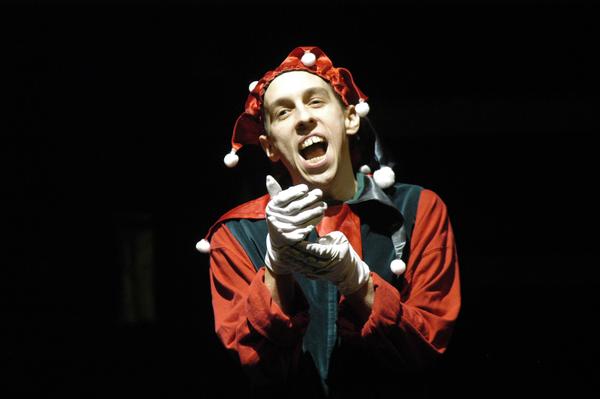
Cover Stories
‘Santaland Diaries' ~ Sure cure for Christmas cranks
By Dale McKinney
Desert Entertainer Magazine
Let's be honest - at some point the holidays' cheer always becomes a bad case of Christmas cranks. The best way to cure the seasonal psychosis is with a good dose of laughter.
Starting Nov. 30, “Santaland Diaries,” playing at the V-Lounge at the Villa Resort (behind Boomers in Cathedral City) will be playing through Dec. 23 - see it when before you snap. East coast actor Scott Wichmann stars in what the “New York Times” dubbed “A delightfully thorny account of working as a yuletide elf at Macy's.”
The author, David Sedaris, who made his fame reading his own works on National Public Radio and is the brother to actress/writer Amy Sedaris (“Strangers With Candy”), wrote about his humiliating experiences during his lean and hungry days working as a elf for Macy's enormous Santaland in New York City in his collected stories “Barrel Fever.”
As you can imagine, the real life of a Macy's elf is not a happy one. There's your demeaning costume, your forced cheerfulness, your corporate torturers, the imperious demands of parents, the unruly kids and, of course, all the crazy co-losers who work with you. On stage, the visual humor plays to the max.
As a struggling actor, Wichmann was no stranger to the world of degrading jobs a performer needs to make ends meet between professional gigs. “I worked at F.A.O. Schwarz as a toy demonstrator,” he recalls over the phone in our interview, “and they had this one toy that just absolutely humbled you. It was called the ‘Butt-head.' I had to put on this huge Velcro head and hand these balls out and have people throw them at me. I had to walk up to people and ask ‘Hey! Wanna play Butthead' with me? I would go home and think ‘There's a kid in my graduating class that's worth six million today and I'm getting balls thrown at my head for a living.'”
Playwright Joe Mantello's stage adaptation of the short story is very faithful to the original, so how hard is it to turn the cynical, dry wit of Sedaris into a comic stage performance? “So many people say comedy is hard,” Wichmann laughs, “but I say comedy is hard - if you're not funny.” For instance, when a pompous parent declares to “Crumpet,” the elf-costumed Sedaris, “I'm going to get you fired,” Sedaris deadpans, “And I'm going to have you killed.” Or when another parent insists that Crumpet tell her son to be good or he'll get coal for Christmas, Sedaris explains that Santa doesn't do coal anymore. “He sneaks into your house and robs you. He'll steal all your appliances and leave you in the dark and cold.”
But Wichmann has no fear of the caustic humor. “I first worked very hard not to sound like Sedaris,” he explains, “and simply be real, be me, and really take off when I play the different characters - like the woman who wants her kid to ask Santa to stop animal testing - I had so much fun playing the contrasting characters to Crumpet.”
And what part of the play does Wichmann find the funniest? “I honestly just love the bit when that jerky Santa demands that Crumpet sing ‘Away in a Manger' for the children and so he responds by singing it like Billie Holliday.” Over the phone, Wichmann whines out a smoky, sexy “Away in a Manger” that had me laughing so hard, we had to stop the interview.
‘Santaland Diaries'
Thursday-Saturday, Nov. 30, Dec. 1, 2, 7, 8, 9, 14, 15, 16, 21, 22, 23
Dinner (6 p.m.) and show, $44 Show only (8 p.m.), $20
V Lounge at The Villa Resort
67-670 Carey Road
Cathedral City, CA
(760) 328-7211
Friday, November 24, 2006
A Bizarre Career Retrospective 'Scott Wichmann 13-33'
This crazy collection of Zany Behavior was compile dby Steven Lowell, a College pal of mine... ENJOY!!
Saturday, November 18, 2006
THE POWER OF ONE.
This is a great video that shows us that we all have the power to effect change. We can change how we take care of one another. We can change how we protect the environment. We can change how we relate to one another. We can heal the divisions between us.
I just love it, and I'd like to share it with you now.
I just love it, and I'd like to share it with you now.
Friday, November 17, 2006
The Torture Question.
This is from www.current.tv -- It shows the 'Coercive Interrogation Technique' of 'waterboarding' and what it actually looks like in a controlled environment. When I saw this, I was appalled. I was also frightened to imagine what it must look like in an 'Uncontrolled' environment. Proponents of this type of interrogation would argue that the terrorists are far less forgiving-- Barbaric to the point of beheadings and other grisly atrocities. I can understand the urge to be vengeful in a proportional way-- That is an entirely human impulse. Yet it is a slippery slope, and we may find ourselves as Amercians giving more and more 'wiggle room' to these kinds of techiniques in the future. We should not become terrorists in out struggle to combat terrorism.
In the words of Senator John McCain, "It's not about who they are-- it's about who WE are."
Watch this and make up your own mind...
In the words of Senator John McCain, "It's not about who they are-- it's about who WE are."
Watch this and make up your own mind...
Thursday, November 16, 2006
Obama under the microscope: An article from the Chcago Sun-Times
The Obama Chronicles: Waukegan interview transcript. On Rezko, mistakes and being held to a high standard.
After a month long blitz--selling his new book, stumping for Democrats, testing the water for a 2008 presidential run, Sen. Barack Obama on Monday traveled to Waukegan, Ill. to stump for a House candidate. He found himself answering questions about a real estate deal he made with a local shady developer named Tony Rezko. Rezko was recently indicted on corruption charges.
Obama, on the road to the White House, will have to run in the primary of public perception, just like his rivals and the Rezko episode is at the least a learning experience for him.
Obama, in a session with local reporters said "I'm human like everybody else and I'm going to make mistakes."
excerpts from the Waukegan question and answer session. ....
What in the world were you doing in a real estate deal with Tony Rezko?
Look, I bought a house. He bought a piece of property next to the house, and that transaction was entirely separate. But what is true is I purchased a 10-foot strip alongside that property from him, and although I paid more than the appraised value of the house, I think it's fair to say that, given some of the issues that were going on with him, it certainly raised the kinds of appearances that I should have been mindful of.
Why'd you do it then?
For the last 10 years, I think people who have worked with me know that I try to maintain the highest standards in how I deal in my personal and public lives. I don't accept lunches with lobbyists. If I play golf with somebody I reimburse them. In this situation, my focus was more on making sure I was paying a fair market price and not thinking through sort of how it potentially would appear. As I said in the newspaper it was a mistake. Not one of my smarter moves.
Did you recruit Tony becuase you needed him. . . . It sounded like you were only going to get (your house) if you had somebody buying the other lot?
No, no, no. I didn't recruit Tony. What happened was I saw this house. . . . We went through our real estate broker. And We put in a bid on the house the way any other purchaser would. The adjoining lot., there was already a bid on that lot. The sellers were the ones who had separated them, and Mr. Rezko became interested in that other lot, and he bid for that lot separately and negotiated with the seller separately.
Did you pay $300,000 less because of connections or clout, or anything Rezko did?
No. Nothing at all related to the purchase of my house involved Rezko. . . . The adjoining lot had already gotten an offer for the list price, which was 600-something-thousand. So the seller already had that in hand. The problem was they needed to sell the house. They were moving, and, so, this was to some degree a fire sale situation for them. They had gotten a new job. They were moving to Maryland. And so they needed to sell the house. That's the reason, as is true in any real estate market, if somebody needs to sell then you've got a little more leverage over them.
So there was no involvement with Rezko in the purchase of the house. . . .
Q: How did it happen that Tony just so bought the lot next to your home?
What happened was . . . Rezko's been a longtime developer in Kenwood. He's got property all across the Kenwood area. When the house came on the market, I asked a number of people about the house because I've never bought a house. I'd owned a condo. And I called a number of friends -- four or five friends -- who either had homes in Kenwood or were familiar with development in Kenwood. Rezko was one of those people. It turned out that the person who had renovated the house which I was interested in purchasing had worked with Rezko in the past, so that was the connection. He [Rezko] ended up looking at the property and became interested in it. But as I said it was negotiated entirely separately. It wasn't something that we were coordinating in any sort of fashion.
The reason we ended up having the same closing date -- that was actually a requirement of the sellers' because the seller was trying to . . . they had conditioned the sale of one lot on the sale of the house.
What do you say to people that your judgment is faulty?
I'm human like everybody else and I'm going to make mistakes. One of the things that I've prided myself on is when I make a mistake, I own up to it. . . . Although I made a mistake in terms of not being attentive to appearances, in terms of the actual transactions themselves, there was no quid pro quo, there was no clout involved. . . . The problem here was you had somebody who was doing state business, who had been a contributor of mine. While I paid more than the appraised value, it's understandable people . . .
Did you know he was under investigation at that point?
Obviously, things had surfaced. But this is somebody I had known for quite some time. He had never asked me for anything. I'd never done anything for him. We had never discussed government issues. But, look, I think it's fair to hold me to a higher standard. And I understand, at this point, I have been in the public eye quite a bit. I'm somebody who's taken the lead both in Springfield and at the federal level on ethics issues, and I think it's entirely appropriate for folks to expect more. . . .
Was the person you were bidding against for your property the same person Rezko was bidding against?
No. No.
How do you know that?
Well, I don't know it for certain, but I don't think so because my broker did not indicate they were the same party.
So there's no way -- either directly or indirectly -- that you knew how much money Tony was offering for his property?
I had no idea whatsoever.
Did you coordinate your bids?
No.
Why did Tony end up paying full price if it were such a fire sale?
There were two separate lots. [On the first lot], there was already a bid for the full price. They already had a bid on the table for that full price.
What have you learned from this?
One of the things that I've always prided on myself is the fact that I have never had any questions about my integrity and how I conduct myself in public office. . . . This is the first time this has happened, and I don't like the feeling. It's frustrating to me, and I'm kicking myself about it. But, as I said, look, I'm going to make some mistakes every once in a while. These aren't mistakes that involve the public trust. They aren't mistakes that involved my responsibilities in terms of representing my constituents. But, one of the things you purchase when you enter into public life is there are going to be a different set of standards, and I'm going to make sure from this point on I don't even come close to the line.
Will this come back to haunt you?
I'm in politics, so anytime you make an error that's something that somebody will be sure to remind you of in the future. And I don't think that's illegitimate. You have to be held accountable for what you do. . . . What I assume is in any election, people look at you in the whole. . . . Here's one time where it appears that he didn't pay enough attention to what the situation was, but hopefully people will judge me on my entire record. And I'm very confident that when they do that, they'll end up feeling I'm somebody they can trust.
Will your groundsman keep cutting the lawn?
. . . . We don't know exactly who is making decisions on behalf of the various properties that are involved. We've talked to the property manager that we have been communicating with, and we just want to make sure of is everything is as separate as possible.
So you're not going to mow his lawn anymore?
No. Here's the problem: the lawn is right next to our house, so I want to make sure somebody mows it. Originally, their intention, as I understand it, was to develop townhomes. They've got to get some sort of curb cut. . . . Right now, they don't have an entry. . . . I could seal off the fence and have people climb over with the lawnmower, but that's probably not . . .
Are you running for president?
After Tuesday, I will have the opportunity to sit down and think about how I can be most useful. That's a conversation that I, first and foremost, have to have with my family, with my pastor. It's also something that I need to have conversations with key people in Illinois because, after all, I'm an Illinois senator, and I think it's very important for me to make determinations in terms of whatever plans I have doing right by the constituents who put me in office.
After a month long blitz--selling his new book, stumping for Democrats, testing the water for a 2008 presidential run, Sen. Barack Obama on Monday traveled to Waukegan, Ill. to stump for a House candidate. He found himself answering questions about a real estate deal he made with a local shady developer named Tony Rezko. Rezko was recently indicted on corruption charges.
Obama, on the road to the White House, will have to run in the primary of public perception, just like his rivals and the Rezko episode is at the least a learning experience for him.
Obama, in a session with local reporters said "I'm human like everybody else and I'm going to make mistakes."
excerpts from the Waukegan question and answer session. ....
What in the world were you doing in a real estate deal with Tony Rezko?
Look, I bought a house. He bought a piece of property next to the house, and that transaction was entirely separate. But what is true is I purchased a 10-foot strip alongside that property from him, and although I paid more than the appraised value of the house, I think it's fair to say that, given some of the issues that were going on with him, it certainly raised the kinds of appearances that I should have been mindful of.
Why'd you do it then?
For the last 10 years, I think people who have worked with me know that I try to maintain the highest standards in how I deal in my personal and public lives. I don't accept lunches with lobbyists. If I play golf with somebody I reimburse them. In this situation, my focus was more on making sure I was paying a fair market price and not thinking through sort of how it potentially would appear. As I said in the newspaper it was a mistake. Not one of my smarter moves.
Did you recruit Tony becuase you needed him. . . . It sounded like you were only going to get (your house) if you had somebody buying the other lot?
No, no, no. I didn't recruit Tony. What happened was I saw this house. . . . We went through our real estate broker. And We put in a bid on the house the way any other purchaser would. The adjoining lot., there was already a bid on that lot. The sellers were the ones who had separated them, and Mr. Rezko became interested in that other lot, and he bid for that lot separately and negotiated with the seller separately.
Did you pay $300,000 less because of connections or clout, or anything Rezko did?
No. Nothing at all related to the purchase of my house involved Rezko. . . . The adjoining lot had already gotten an offer for the list price, which was 600-something-thousand. So the seller already had that in hand. The problem was they needed to sell the house. They were moving, and, so, this was to some degree a fire sale situation for them. They had gotten a new job. They were moving to Maryland. And so they needed to sell the house. That's the reason, as is true in any real estate market, if somebody needs to sell then you've got a little more leverage over them.
So there was no involvement with Rezko in the purchase of the house. . . .
Q: How did it happen that Tony just so bought the lot next to your home?
What happened was . . . Rezko's been a longtime developer in Kenwood. He's got property all across the Kenwood area. When the house came on the market, I asked a number of people about the house because I've never bought a house. I'd owned a condo. And I called a number of friends -- four or five friends -- who either had homes in Kenwood or were familiar with development in Kenwood. Rezko was one of those people. It turned out that the person who had renovated the house which I was interested in purchasing had worked with Rezko in the past, so that was the connection. He [Rezko] ended up looking at the property and became interested in it. But as I said it was negotiated entirely separately. It wasn't something that we were coordinating in any sort of fashion.
The reason we ended up having the same closing date -- that was actually a requirement of the sellers' because the seller was trying to . . . they had conditioned the sale of one lot on the sale of the house.
What do you say to people that your judgment is faulty?
I'm human like everybody else and I'm going to make mistakes. One of the things that I've prided myself on is when I make a mistake, I own up to it. . . . Although I made a mistake in terms of not being attentive to appearances, in terms of the actual transactions themselves, there was no quid pro quo, there was no clout involved. . . . The problem here was you had somebody who was doing state business, who had been a contributor of mine. While I paid more than the appraised value, it's understandable people . . .
Did you know he was under investigation at that point?
Obviously, things had surfaced. But this is somebody I had known for quite some time. He had never asked me for anything. I'd never done anything for him. We had never discussed government issues. But, look, I think it's fair to hold me to a higher standard. And I understand, at this point, I have been in the public eye quite a bit. I'm somebody who's taken the lead both in Springfield and at the federal level on ethics issues, and I think it's entirely appropriate for folks to expect more. . . .
Was the person you were bidding against for your property the same person Rezko was bidding against?
No. No.
How do you know that?
Well, I don't know it for certain, but I don't think so because my broker did not indicate they were the same party.
So there's no way -- either directly or indirectly -- that you knew how much money Tony was offering for his property?
I had no idea whatsoever.
Did you coordinate your bids?
No.
Why did Tony end up paying full price if it were such a fire sale?
There were two separate lots. [On the first lot], there was already a bid for the full price. They already had a bid on the table for that full price.
What have you learned from this?
One of the things that I've always prided on myself is the fact that I have never had any questions about my integrity and how I conduct myself in public office. . . . This is the first time this has happened, and I don't like the feeling. It's frustrating to me, and I'm kicking myself about it. But, as I said, look, I'm going to make some mistakes every once in a while. These aren't mistakes that involve the public trust. They aren't mistakes that involved my responsibilities in terms of representing my constituents. But, one of the things you purchase when you enter into public life is there are going to be a different set of standards, and I'm going to make sure from this point on I don't even come close to the line.
Will this come back to haunt you?
I'm in politics, so anytime you make an error that's something that somebody will be sure to remind you of in the future. And I don't think that's illegitimate. You have to be held accountable for what you do. . . . What I assume is in any election, people look at you in the whole. . . . Here's one time where it appears that he didn't pay enough attention to what the situation was, but hopefully people will judge me on my entire record. And I'm very confident that when they do that, they'll end up feeling I'm somebody they can trust.
Will your groundsman keep cutting the lawn?
. . . . We don't know exactly who is making decisions on behalf of the various properties that are involved. We've talked to the property manager that we have been communicating with, and we just want to make sure of is everything is as separate as possible.
So you're not going to mow his lawn anymore?
No. Here's the problem: the lawn is right next to our house, so I want to make sure somebody mows it. Originally, their intention, as I understand it, was to develop townhomes. They've got to get some sort of curb cut. . . . Right now, they don't have an entry. . . . I could seal off the fence and have people climb over with the lawnmower, but that's probably not . . .
Are you running for president?
After Tuesday, I will have the opportunity to sit down and think about how I can be most useful. That's a conversation that I, first and foremost, have to have with my family, with my pastor. It's also something that I need to have conversations with key people in Illinois because, after all, I'm an Illinois senator, and I think it's very important for me to make determinations in terms of whatever plans I have doing right by the constituents who put me in office.
Now we're talking!!!
From www.crooksandliars.com-- A first step in the right direction by what some have called 'The Party of No Ideas...'
Washington- Senator Chris Dodd (D-CT), an outspoken opponent of the Military Commission Act of 2006, today introduced legislation which would amend existing law in order to have an effective process for bringing terrorists to justice.
The Effective Terrorists Prosecution Act:
* Restores Habeas Corpus protections to detainees
* Narrows the definition of unlawful enemy combatant to individuals who directly participate in hostilities against the United States who are not lawful combatants
* Bars information gained through coercion from being introduced as evidence in trials
* Empowers military judges to exclude hearsay evidence the deem to be unreliable
* Authorizes the US Court of Appeals for the Armed Forces to review decisions by the Military commissions
* Limits the authority of the President to interpret the meaning and application of the Geneva Conventions and makes that authority subject to congressional and judicial oversight
* Provides for expedited judicial review of the Military Commissions Act of 2006 to determine the constitutionally of its provisions
This is currently not the case under the Military Commission Act, which will be the subject of endless legal challenges. As important, the bill would also seek to ensure that U.S.servicemen and women are afforded the maximum protection of a strong international legal framework guaranteed by respect for such provisions as the Geneva Conventions and other international standards, and to restore America’s moral authority as the leader in the world in advancing the rule of law.
“I take a backseat to no one when it comes to protecting this country from terrorists,” Sen. Dodd said. “But there is a right way to do this
and a wrong way to do this. It’s clear the people who perpetrated these horrendous crimes against our country and our people have no moral compass and deserve to be prosecuted to the full extent of the law. But in taking away their legal rights, the rights first codified in our country’s Constitution, we’re taking away our own moral compass, as well.”
Washington- Senator Chris Dodd (D-CT), an outspoken opponent of the Military Commission Act of 2006, today introduced legislation which would amend existing law in order to have an effective process for bringing terrorists to justice.
The Effective Terrorists Prosecution Act:
* Restores Habeas Corpus protections to detainees
* Narrows the definition of unlawful enemy combatant to individuals who directly participate in hostilities against the United States who are not lawful combatants
* Bars information gained through coercion from being introduced as evidence in trials
* Empowers military judges to exclude hearsay evidence the deem to be unreliable
* Authorizes the US Court of Appeals for the Armed Forces to review decisions by the Military commissions
* Limits the authority of the President to interpret the meaning and application of the Geneva Conventions and makes that authority subject to congressional and judicial oversight
* Provides for expedited judicial review of the Military Commissions Act of 2006 to determine the constitutionally of its provisions
This is currently not the case under the Military Commission Act, which will be the subject of endless legal challenges. As important, the bill would also seek to ensure that U.S.servicemen and women are afforded the maximum protection of a strong international legal framework guaranteed by respect for such provisions as the Geneva Conventions and other international standards, and to restore America’s moral authority as the leader in the world in advancing the rule of law.
“I take a backseat to no one when it comes to protecting this country from terrorists,” Sen. Dodd said. “But there is a right way to do this
and a wrong way to do this. It’s clear the people who perpetrated these horrendous crimes against our country and our people have no moral compass and deserve to be prosecuted to the full extent of the law. But in taking away their legal rights, the rights first codified in our country’s Constitution, we’re taking away our own moral compass, as well.”
Monday, November 13, 2006
'Run, Barack, Run' By David Brooks
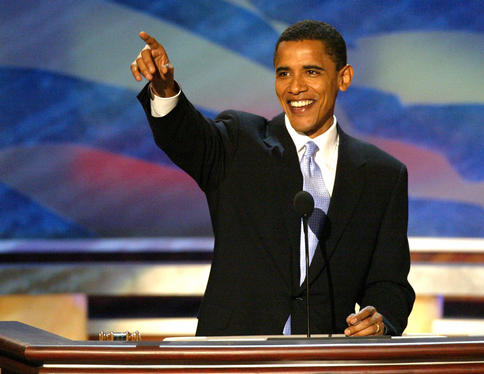
Barack Obama should run for president.
He should run first for the good of his party. It would demoralize the Democrats to go through a long primary season with the most exciting figure in the party looming off in the distance like some unapproachable dream. The next Democratic nominee should either be Barack Obama or should have the stature that would come from defeating Barack Obama.
Second, he should run because of his age. Obama’s inexperience is his most obvious shortcoming. Over the next four years, the world could face a genocidal civil war in Iraq, a wave of nuclear proliferation, more Islamic extremism and a demagogues’ revolt against globalization. Do we really want a forty-something in the White House?
And yet in his new book, “The Audacity of Hope,” Obama makes a strong counterargument. He notes that it’s time to move beyond the political style of the baby boom generation. This is a style, he said in an interview late Tuesday, that is highly moralistic and personal, dividing people between who is good and who is bad.
Obama himself has a mentality formed by globalization, not the S.D.S. With his multiethnic family and his globe-spanning childhood, there is a little piece of everything in Obama. He is perpetually engaged in an internal discussion between different pieces of his hybrid self — Kenya with Harvard, Kansas with the South Side of Chicago — and he takes that conversation outward into the world.
“Politics, like science, depends on our ability to persuade each other of common aims based on a common reality,” he writes in his book. He distrusts righteous anger and zeal. He does not demonize his opponents and tells audiences that he does not think George Bush is a bad man.
He has a compulsive tendency to see both sides of any issue. Joe Klein of Time counted 50 instances of extremely judicious on-the-one-hand-on the-other-hand formulations in the book. He seems like the guy who spends his first 15 minutes at a restaurant debating the relative merits of fish versus meat.
And yet this style is surely the antidote to the politics of the past several years. It is surely true that a president who brings a deliberative style to the White House will multiply his knowledge, not divide it.
During our talk, I reminded Obama that at some level politics is about power, not conversation. He pointed out that he’d risen from nothing to national prominence in a few years so he knew something about acquiring power, but he kept returning to his mode, which is conversation, deliberation and reconciliation.
The third reason Obama should run for president is his worldview. At least in the way he conceptualizes the world, he is not an orthodox liberal. In the book, he harks back to a Hamiltonian tradition that calls not for big government, but for limited yet energetic government to enhance social mobility. The contemporary guru he cites most is Warren Buffett.
He has interesting things to say about the way culture and economics intertwine to create urban poverty. He, conceptually, welcomes free trade and thinks the U.S. may have no choice but to improvise and slog it out in Iraq.
The chief problem in his book is that after launching off on some interesting description of a problem, he will settle back, when it comes time to make a policy suggestion, into a familiar and small-bore Democratic proposal. I’d give him an A for conception but a B-minus for policy creativity.
Obama, who is nothing if not honest about himself, is aware of the problem, and has various explanations for it. And what matters at this point is not his platform, but the play of his mind. He is one of those progressives, like Gordon Brown in Britain, who is thinking about the challenges of globalization outside the normal clichés.
Coming from my own perspective, I should note that I disagree with many of Obama’s notions and could well end up agreeing more with one of his opponents. But anyone who’s observed him closely can see that Obama is a new kind of politician. As Klein once observed, he’s that rarest of creatures: a megahyped phenomenon that lives up to the hype.
It may not be personally convenient for him, but the times will never again so completely require the gifts that he possesses. Whether you’re liberal or conservative, you should hope Barack Obama runs for president.
Subscribe to:
Posts (Atom)